These are all written by Chris Fear and cover history related to people and events in Kingsland and the surrounding area. They were originally published in the Kingsland News and will be added to in the future.
INDEX – just click the title to go straight to the article:
Kingsland Canal
Kingsland Mop
The Priest Who Defied a Queen
Murder At The Quarry
Bertillon
The Truth Sent from Above
The Devil in Kingsland
Houses
George Painter
Ralph the Timid
The Woolhope Naturalists’ Field Club in Kingsland, 1864
Alfred Watkins and historical crosses
Kingsland Canal

The prominent hump in the at Drybridge, on the old turnpike road to Mortimer’s Cross, is intriguing. There is no stream, no culvert and no ditch to account for this bump, which feels very much like a hump-back bridge. In fact, it is one of the few features that remains to remind us of the Leominster Canal, planned to take agricultural goods from Kington to join the River Severn at Stourport. In 1789, engineer, Thomas Dadford’s, route for the canal was accepted and work soon began on several sections at once, with a plan to proceed via a flight of locks to higher ground east of Kington and then progress to Leominster, Wooferton, Tenbury, Newham Bridge, joining the Severn at Stourport. The only section of the canal to be completed was that from Wooferton to Marlbank, opened in October 1794, and this continued to operate, unprofitably, until the 1850s.
During 1794, work was also underway on the Kingsland section, with the canal route passing through what is now Shobdon airfield, and then crossing Kingsland’s Great West Field. Passing under the turnpike road at Drybridge, it continued in a straight line to cross the Boar’s Field. About 300 yards downstream from Lugg Green bridge, an aqueduct was constructed to take the canal across the river Lugg, the first of three such brick-built structures on the route, and this was completed towards the end of the year.
Christmas in 1794 was very cold, with January 1795 recording the lowest average temperatures since records began in 1659. Many local rivers were iced over and, with a warm start to February, a rapid thaw commenced. Waterways of the mid-Wales watershed began to thaw first, and huge volumes of water swelled the rivers of the Lugg and Wye valleys. Heavy rain added to the misery. The bridge at Aymestry was washed away in the flood, later to be rebuilt by John Gethin of Brick House, Kingsland. Another casualty of the Great Flood was the newly completed aqueduct at Lugg Green. This was destroyed to its stone foundations, which are still in the banks of the river as demonstrated by excavations in the 1960s.
East of Wooferton, the line of the canal can still be traced, running to the north of, and parallel with, the A456 to Tenbury Wells. Prominent features include the Teme Aqueduct north of Gosford, and the Rea Aqueduct north-east of Newnham Bridge, both now derelict as a result of an explosives exercise during WW2 and a collapse in 2013, respectively. The longest tunnel on the canal, the Southnet tunnel collapsed soon after it was built. Thomas Dadford’s engineering projects had a reputation for poor workmanship and, after the collapse of his Ashford Tunnel on the Montgomeryshire and Brecon Canal near Usk, Dadford’s reputation never recovered. There is also one remaining well-defined stretch of The Leominster Canal at Wyson Locks, near Wooferton.
There is also a ghost story. The entrance to the Southnet tunnel, off a minor road near Frith Common, is now overgrown and untraceable. The tunnel collapsed in 1795 (clearly not a good year for the canal!), entombing two unnamed and unremembered workmen and their boat. Their restless spirits are said to haunt the vicinity of the tunnel.
Kingsland Mop
Our recent wassail at Aymestry, together with the casualties of winter gales, brings to mind the tree-lore of the local area. This part of the Marches was an important sub-kingdom of Mercia, the Magonsaete, named after the Roman town of Magnis (Kentchester) by Anglo-Saxon settlers in the fifth and sixth centuries. The Saxons brought a pagan animistic cult of tree worship which met a similar Welsh Brythonic tradition and persisted despite the gradual Christianisation of this period and the criminalisation of giving gifts to tree spirits, for which there were severe penalties from the 7th and 8th centuries. Votive offerings to trees continued into the 11th century, when English law explicitly forbade the recognition of use of a peaceful area around stones, trees or springs, known as friðplott or friðgeard.

The Kingland area maintained many venerable trees into recent times. During the annual marking of the parish boundaries boys would be beaten at important points, often marked by distinctive trees, presumably to impress the area on their memories (as well as their behinds). Of the historic trees in the village, only the Holgate Oak remains to fascinate by its age and powers of survival. Oak trees grow slowly and can live to 1000 years, although they usually begin to die after 600 years. The oak by the roadside at Holgate Farm became a hollowed-out shell around 1760, when a gate was cut into it as the farm entrance. Assuming that it was an average age for decline at this point, this venerable oak is likely, now, to be at least 850 years old, and probably more.
A shorter life was enjoyed by the “Kingsland Mop”, a 70 foot pine tree in a garden in the middle of the village. Rev. Jobling describes it as “resembling the Stone Pine of Italy”. The owner had pruned all the lower branches, leaving a bare trunk with a large head of needles – hence the name. This tree was blown down in a gale, taking out a carpenter’s yard and “cutting in half a range of buildings nearby”.
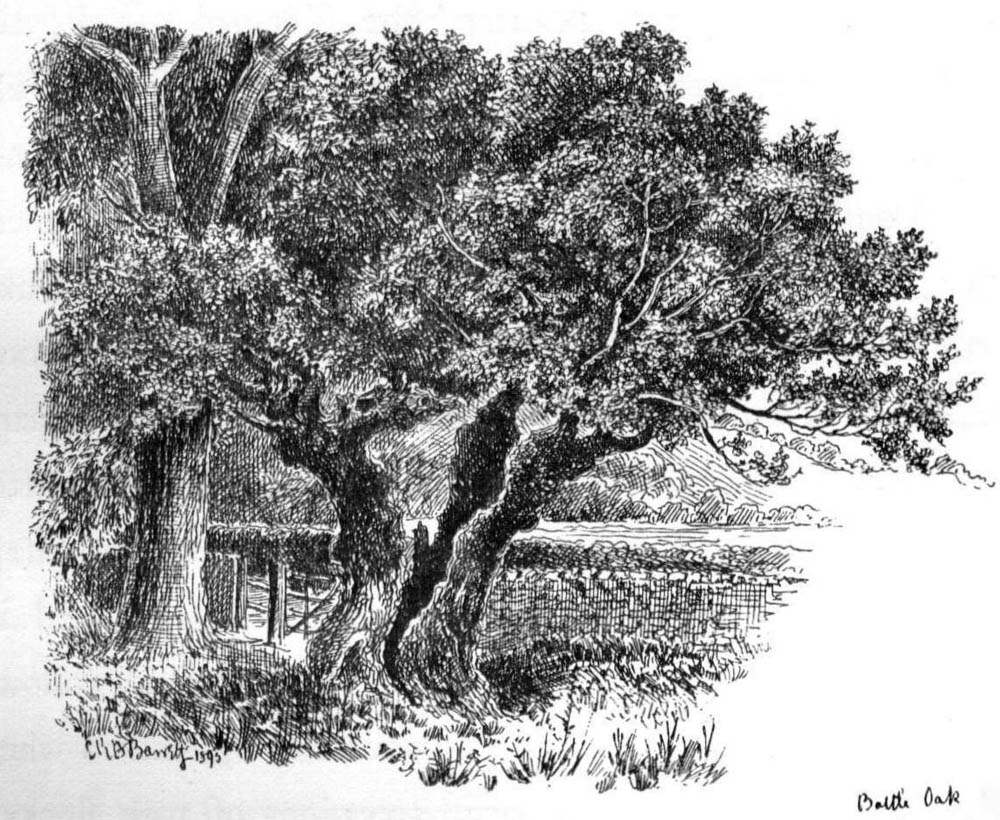
Sadly, the “Battle Oak”, which stood near Bluemantle Cottage at Mortimer’s Cross is no longer a landmark, having died and been removed some years ago. This ancient oak tree was said to have sheltered Edward IV when he camped nearby before the battle in 1461. It is possible that this is the case, but a recent survey was unable to confirm the site of the battle and the naming of Bluemantle after a royal herald is almost certainly a romantic Victorian invention.
Perhaps a memory of pagan tree-worship survived in an oak tree that stood in Oaker wood. Tradition had it that diseases of the throat would be cured by fixing some hair from the sufferer to an oak tree from which an ash was growing. Jobling says that this was happening as late as 1907 but that much of the hair came from emigrées who sent their locks to the gamekeeper for the purpose!
The Priest who Defied a Queen
Born about 1520, Edmund Danyell’s origins are unclear. He may have been from an East Anglian family of Essex or Suffolk, through Thomas Danyell (born after 1488, died 1566), and is thought, as well, to be related to the very early Irish Jesuit, also called Edmund Daniel (1541/2–1572), who was a Jesuit novice in Rome in 1561. Danyell was a good scholar and went up to Merton College, Oxford, in 1539, gaining his BA and being made a Fellow in the following year. He received his MA on 4 April, 1544. By this time, he was organist of the college, and a close friend of John Sheppard, the English Renaissance composer who was director of music (informator choristum) at Magdalen College.
In 1548, Danyell was appointed Rector of Kingsland. This was the start of the Protestant Reformation under Edward VI, and it is perhaps surprising that someone from the strongly Roman Catholic Merton College should be appointed, especially as the then Bishop of Hereford, John Skypp, had been almoner to Anne Boleyn. Under Rev. Edmund Danyell, services in Kingsland continued to follow the “old religion”. Indeed, it was well recognised that “in Kingsland is a chauntry for our ladyes Service in which were divers praists services [which] continued undisguised till the reign of Queen Elizabeth”. This must have been a worrying time for those in religious orders, with the protestant adherents in power during the reign of Edward, and Roman Catholicism in the ascendency under his sister, Mary, who became queen in 1553.
Edmund Danyell thrived under Queen Mary. He became a subdean of the Queen’s chapel. In 1558 he was appointed Dean of Hereford Cathedral and Canon of Worcester. In the same year the will of John Sheppard left the oversight of his children, Nathan and Elizabeth, to “Mr Danyell Subdene of the Quens chappelle”. Sadly, Danyell was to be unable to fulfil his promise to his old friend. Mary died on 17 November 1558, and was succeeded by her protestant sister, Elizabeth.
At the start of her reign, Elizabeth was moderately tolerant of those who wanted to celebrate the old religion, provided they were prepared to recognise her, and not the Pope, as the head of the English Church. In 1559, the Act of Supremacy required all people taking public or church office in England to swear the following:
“I, A. B., do utterly testify and declare in my conscience that the Queen’s Highness is the only supreme governor of this realm, and of all other her Highness’s dominions and countries, as well in all spiritual or ecclesiastical things or causes, as temporal, and that no foreign prince, person, prelate, state or potentate hath or ought to have any jurisdiction, power, superiority, pre-eminence or authority ecclesiastical or spiritual within this realm; and therefore I do utterly renounce and forsake all foreign jurisdictions, powers, superiorities and authorities, and do promise that from henceforth I shall bear faith and true allegiance to the Queen’s Highness, her heirs and lawful successors, and to my power shall assist and defend all jurisdictions, pre-eminences, privileges and authorities granted or belonging to the Queen’s Highness, her heirs or successors, or united or annexed to the imperial crown of this realm. So help me God, and by the contents of this Book.”
Edmund Danyell remained true to his faith and refused to swear the oath. While refusal to swear, during this period of leniency was not yet classed as treason and punishable by death, it was a criminal offence and Danyell was committed to the custody of the Marquess of Winchester, William Paulet, also Earl of Wiltshire and High Treasurer of England. Deprived of his offices, he is recorded in the Hereford Bishops’ Roll as having resigned the rectorship of Kingsland in 1559; he was also deprived of the office of Dean at Hereford. On 7 December 1559, Thomas Taylor was installed as Rector of Kingsland. Imprisoned in Winchester castle, Danyell managed to escape (as did several others – security appears to have been lax), and flee to Rome.
In Rome, he gained a place at the English Hospice of the Most Holy Trinity and St Thomas (which became the English College seminary in 1579) from 1565, and was elected Custos, or Warden, for a term of office running from May 1569 until the end of April 1570. He may have been able to pursue his musical interests, as the College was very active in church music. Palestrina was on the payroll, and (much later) Corelli. Edmund Danyell died on 30 October 1576, aged 57, and is buried in the chapel of the English College.
(With thanks to Professor Maurice Whitehead, Research Fellow & Director of Heritage Collections,
Archivum Venerabilis Collegii Anglorum de Urbe, Rome.)
Murder at the Quarry
The brown stone building in Hereford bus terminal, with its craft shop and café, is all that remains of the “new prison”, built in 1796 and demolished after 1929. It stood directly opposite the Merton Hotel in Commercial Road. This was of great significance on 15 December 1903, when repairs to the hotel chimneys had required the erecting of scaffolding high enough to see over the prison walls. Although public execution had been banned in England in 1868, there was still a sufficient interest for the Under Sheriff of Herefordshire to compensate the builders to stop work, and to place a police guard on the scaffolding that morning. Meanwhile, on another type of scaffold, inside the prison walls, a local man was awaiting his appointment with the hangman, Henry Pierrepoint.
The story began on a hot day in the previous July, when PC Preece, of Kingsland police station, was summoned to the Mortimers Cross mill to arrest sixty-one year-old William Haywood of Yarpole. Mr Haywood had shocked passers-by when he had emerged from the track leading to Pokehouse quarry, pushing a wheelbarrow containing the body of an elderly woman. He explained that she was his wife and had met with a terrible accident when they had been working in the quarry. As PC Preece arrived, Mr Haywood jumped to his feet, saying that the his wife had “gone” and he was going to drown himself. He then made for the river Lugg, but was restrained by the crowd that had gathered.
Dr Robert Williams was called to the police station to undertake an examination. It was quickly obvious that Mrs Haywood had not died accidentally. She had multiple serious injuries and Dr Williams concluded that she had been beaten to death. An examination of the quarry revealed the site of the murder underneath a young oak tree.
The inquest, held at the Mortimers Cross Inn, heard that Mr and Mrs Haywood had a violent relationship. The only one of their six children still living with them said that her father had spent the afternoon of Friday 10 July in the Bell Inn at Yarpole, and had later come home drunk to be excluded from the house by his wife. He had spent the night in the quarry and was drinking in the Mortimers Cross in at seven the following morning, taking a bottle of whisky and beer back to his work with him. At 1pm he had gone back to the pub, consumed another pint, and remarked to the other customers that his wife had met with an accident at the quarry and if she was dead when he got back he would bury her in the brook.
Unsurprisingly, the coroner’s verdict was of wilful murder and Haywood was committed for trial to the Hereford Assizes. With no choice but to plead guilty, his defence tried to prove insanity. The jury were told of the domestic violence in the relationship and that Haywood had previously served a prison sentence for assault. A psychiatric expert from the county asylum offered his opinion that Haywood was “an imbecile of the higher grade” and that the murder was typical of that seen in alcoholic homicide, leading to sudden explosive outbursts of aggression with minor provocation. The jury took only minutes to return a verdict of guilty.
William Haywood was attended at his execution by Rev C.A. Treherne, who said he died accepting the justice of his sentence and asking forgiveness. Mrs Haywood was laid to rest in Yarpole churchyard with a wreath inscribed “With fondest love from her dear children and ever-loving husband”.
(With acknowledgement to Nicola Sly’s “Herefordshire Murders”)
Bertillon
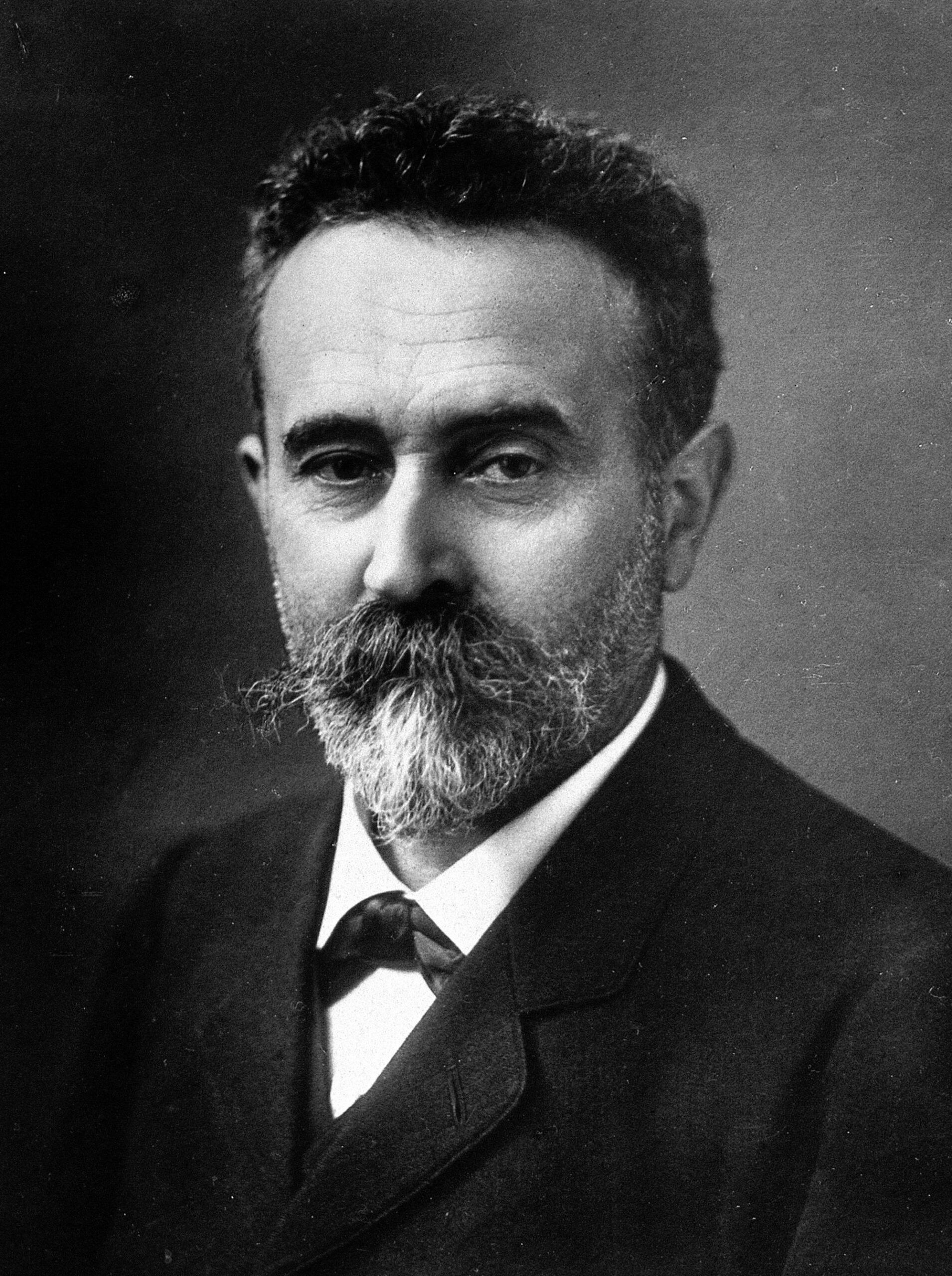
Alphonse Bertillon was a worry for his father, a well-respected Parisian government statistician. He had been expelled from the prestigious Imperial Lycée of Versailles, failed to hold a job down in France, and had the same experience during his travels in England. In 1875, at the age of 22, young Alphonse joined the French army, but did not distinguish himself and left after a few years without furthering his education or making himself more employable. Calling in personal favours, his father arranged for him to join the Paris police as a clerk.
Perhaps sparking some dormant personality trait, the work of filing and indexing appealed to Alphonse. He became frustrated with the system used for identifying criminals and the impossibility of matching them to crimes for which they had previously been convicted. In his spare time, using inmates at the La Santé Prison, Bertillon developed a system of anthropomorphic measurements of body size and shape, going on to introduce mugshots of arrested persons to identify recidivists. Alphonse also developed the science of ballistics, invented the dynamometer to measure the force used in breaking and entering, and started the use of compounds to preserve shoeprints at crime scenes.
By 1894, Alphonse Bertillon was one of the foremost experts in forensics. He gave evidence for the prosecution at the Dreyfus trial, claiming that one of the letters had been written by Dreyfus in a disguised hand. This was one area in which Bertillon was not an expert, however, but his “moonstruck eyes, his sepulchral voice, the saturnine magnetism” and “presence of a necromancer” caused the jury to accept Bertillon’s flawed evidence, leading to a terrible miscarriage of justice. The innocent Dreyfus was convicted of spying and sent to Devil’s Island. He was finally cleared in 1906.
Two years later, in June 1896, a large number of bodies began to be washed up on the shore of Ushant, an island off the coast of Brittany. The local fishermen were recovering new bodies daily, and police were unable to make identifications. The steam packet Drummond Castle, en route from Cape Town to London, had run aground on rocks late at night, as its passengers were below decks getting ready for bed or sleeping. In all fifty-three bodies of men, women and children, many naked or in night clothes, were washed ashore. There were only three survivors.
The local police sent for Bertillon who, using personal information from families and marks on the bodies, was able to make a positive identification of all but two.
On board the ship was the Gethin family. John Gethin was born at Brick House, Kingsland in 1866 and schooled at St Peter’s in Hereford. He trained as an architect and set up practice in Cardiff, where he met Emily Thompson, the daughter of a director of the Barry Railway Company. The couple were married in 1890. After the arrival of Lorna, in 1892, and John, in 1894, Mrs Gethin was in fragile health and the family took an extended break in South Africa for the climate. With them went their friend, Jemima Peace, and the children’s nurse, Eliza Preston. All travelled as first class passengers.
Sadly, the Gethins and their companions were not among the bodies washed ashore. They are commemorated in a brass plaque on the chancel wall to the left of the altar in Kingsland Church. They are also commemorated on the grave stone of Emily’s father, Thomas Roe Thompson, which is near the gate into the churchyard of St Dochdwy’s church, Llandough near Penarth. On the orders of Queen Victoria, a medal was struck for those involved in the rescue efforts.
Before his death in 1914, Bertillon wrote a paper on the use of 16 characteristics of fingerprints that he thought were unique to each individual. This was used to develop the system of fingerprinting still in use today.
The Truth Sent from Above
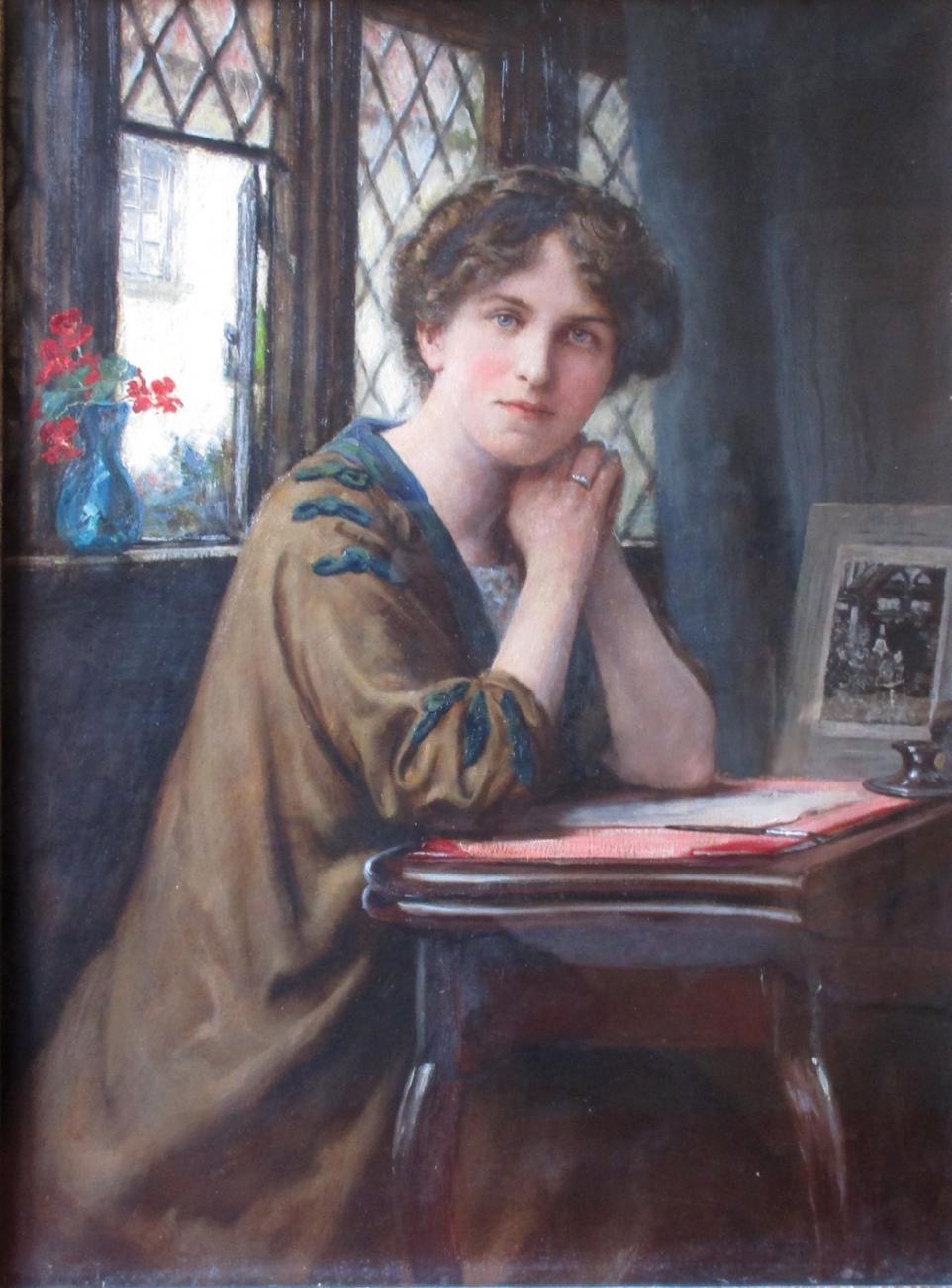
This is the truth sent from above,
The truth of God, the God of love;
Therefore don’t turn me from your door,
But hearken all, both rich and poor.
So runs the first verse of a Christmas carol, as published in the Folk Song Society Journal for 1909, where it is attributed to Mr W Jenkins of Kings Pyon. The text recalls the fall from grace of Adam, and the promise of redemption by Jesus.
The carol was collected by composer Ralph Vaughan Williams with the help of Mrs Ella Mary Leather, a collector of local folklore. Ella Leather was born Ella Mary Smith at Bidney, between Dilwyn and Pembridge, in 1874. Although well educated at Hereford High School for Girls, and later to write a seminal work on the folklore of Herefordshire, Ella struggled to note down local songs. She was put in touch with Vaughan Williams, who lent her a phonograph which allowed her to record onto wax cylinders.
Ella Leather went on to work with Cecil Sharp who, like Vaughan Williams, Holst, Finzi and others, felt it was their duty and pleasure to collect the heritage of the local oral tradition of folk songs and tales. Vaughan Williams used the carol in his Fantasia on Christmas Carols of 1912, and arranged it as one of his Six Herefordshire Carols. The Finzi Society preserve a letter, dated 1923, from Vaughan Williams to the young Gerald Finzi, who asked to use the carol in a composition:
Dear Mr Finzi
As far as I am concerned, with pleasure. But please ask Mrs Leather as well … By the way perhaps I ought to tell you that I also have used the tune in a choral work [almost certainly Fantasia on Christmas Carols, 1912] published by Stainer and Bell.
Yours sincerely,
- Vaughan Williams
Ella married a local solicitor and settled down to live in Weobley, where they raised three sons, one of whom died in World War I. Ella, too, worked for the war effort – as a nurse for the Red Cross. She would go on to collect Morris dance steps and music, and to publish an article on the timber-framed houses of the village. She died suddenly of a heart attack in 1928, and is buried in Weobley churchyard.
There is, however, another facet to this story. Cecil Sharp, Ella’s collaborator, published an eight-verse version of the carol in his English Folk-Carols of 1911. He attributed it to the Shropshire Village of Donnington Wood, where it was given to him by Mr Seth Vandrell and Mr Samuel Bradley. The tune is completely different from the one from Kings Pyon, and it seems likely that the words of popular carols were sung to different tunes in different regions of the counties. In this case, the words and tune can be traced back to publications in 1823 and 1847.
The Devil in Kingsland
Ella Leather (see “The Trust sent from Above”), in her Folklore of Herefordshire, records a legend that Kingsland church was first built at Lawton, but was torn down each night by the Devil. There are similar local traditions for other churches in Herefordshire, notably at Clodock and Much Cowarne. Quite why the Devil would concern himself with where a church was built is not explained, but the origin of these stories may lie in the sites of early burial grounds outside the bounds of the village. Crossroads persisted into recent history as places associated with evil forces, and were typically where suicides and executed criminals were buried or gibbetted.
Like many rural areas, Herefordshire seems to have had its share of demonic encounters. Another site in the Lugg Valley is the Devil’s Stone, more properly Wergin’s Stone, a neolithic menhir near Sutton St. Nicholas. In 1642, this stone was reported to have been dragged 120 yards by a demonic wind with a black dog seen running in front of it – it took a team of twelve oxen more than a day to drag the stone back to its original position. In the Golden Valley, Jack of Kent would wander from village to village doing good deeds or mischief depending on the conduct of the locals. The original Jack, John or Siôn is thought to have been an unnamed vicar of Kentchurch who acquired his powers by attending the Devil’s “Black School”. It is easy to see how these tall tales originated in isolated communities during the dark nights of winter.
The church at Kingsland is entered through a north door. In some parts of the country, notably Sussex, such doors are called Devil’s Doors, supposedly left open during baptism to allow the escape of the Devil. There is, in fact, no evidence to support this notion, either in church writings or in the rite of baptism, and one historian has described it as “post-Reformation antiquarianism resulting from a lack of liturgical knowledge”. Indeed, as in Kingsland, many churches have north doors for the simple reason that the village is to the north of the church! It has also been pointed out that some of these doors have been blocked up to prevent the Devil accessing the church. Sitting in church last Sunday I have considerable sympathy with the suggestion that they were blocked to prevent the draft from northerly winds.
There remains a popular perception that the north side of a church is undesirable and may be associated with the forces of Satan. This is where suicides and unbaptised babies were buried until the late Victorian period. The north side of the church also has an association with women: anchoress’s cells and Lady Chapels are more commonly found on the north side. These traditions have been traced to Isaiah 14:12-20 which refers to Lucifer being thrown down and setting up his throne “on the summit of Zaphet”, which was to the north of mount Zion. Another explanation is that facing the altar, north is the left side of the church and the Latin for left is sinister. The attitudes towards women of mediaeval clergy are well known.
It may be worth reflecting, however, the next time you are at a wedding, that the groom’s party traditionally sits on the right, with the bride’s “sinister” relatives (and his future mother-in-law) on the left!
With acknowledgement to Jeremy Harte’s Cloven Country.
Houses
In his novel, Foxglove Summer, Ben Aaronivitch describes Aymestrey as “less a village than a diorama of the last six hundred years of English vernacular architecture stretched along either side of the road”. If this is the case, then surely Kingsland equals or surpasses it for wealth and variety of building styles. The village boasts fifty listed buildings, ranging from the thirteenth century church of St Michael and All Angels, through 15th century Must Mill, a variety of cottages from the 16th to 18th centuries, to the Victorian period and various styles of modern build that continue to evolve. While not, perhaps, as picturesque as Pembridge and Eardisland, it is difficult to understand how Kingsland could have been left out of the trail of Herefordshire “Black and White Villages”, given its wealth of half-timbered properties.
Perhaps one reason for the impression of fewer black and white houses is the trend towards putting brick facades on these older properties, a practice that reflects the developing tastes of the centuries since they were first built, aided by the increasing prosperity of Kingsland with its “lemster gold” supplying the felt and hatting industries.
Bricks have been used in construction since prehistoric times, but in England stone and wood was preferred except in areas of Eastern England where stone was not readily available. The clays of Cambridgeshire, Huntingdonshire and Essex promoted a thriving brick manufacturing industry from the 14th century, but even in the Tudor and early Stuart periods, bricks were not the material of choice and, where used, were mostly hand-made on site.
Much changed following the restoration of Charles II in 1660 and especially following the Great Fire of London in 1666, which demonstrated the potentially disastrous consequences of relying on wood-framed, wattle and daub panelled streets. (This was well-know to the Normans who used the term couvre-feu (“cover fire”) to order the extinguishing of all fire in a town by a certain time – the origin of the word “curfew”.)
The following century saw significant improvements in the manufacture of bricks, with the use of blended clays, better moulding and improved firing at more consistent temperature. This led to a standardisation of colour, and even a colour range from “hot” reds and browns through to pinks and yellow, which better simulated natural stone. There were also improvements in mortar. In the 1780’s, Rev. James Parker developed a cement made by burning “septaria”, nodules found in clay deposits and containing a mixture of clay minerals and calcium carbonate. When ground to a fine powder, mixed with sand and hydrated, the cement set in 5-15 minutes, revolutionising the speed of building. In 1796, Parker patented his “Roman cement” (which had nothing to do with Roman mixtures), sold the patent and emigrated to America, where he died the following year.

What relevance does all this have to Kingsland?
By the Georgian period, black and white cottages were seen as old-fashioned and rustic. The future and fashion was brick. All over the country, houses were being rebuild in brick and those who were unable to afford this would put their modest means towards achieving a fashionable façade. This means that many of the black and white houses of his period were re-fronted in brick, typically using the “Flemish bond” technique of alternating stretchers (sides) and headers (ends) to give a strongly functional, and pleasingly attractive, finish. Perhaps the best example of this in Kingsland is the façade of Angel House, which belies the beautiful timber-frame construction behind. There are a number of other such properties, and John Gethin’s former home, “Brick House”, provides another excellent example, perhaps named at the time to emphasise the fashionable leanings of its owners.
An interesting footnote: It requires a space of around 9 inches to front a black and white house in stone. Houses that were immediately adjacent to roads were often unable to afford this and remain unaltered. In the Home Counties, the problem of encroachment was solved by facing old houses with tiles so as to reduce the need for expansion.
George Painter
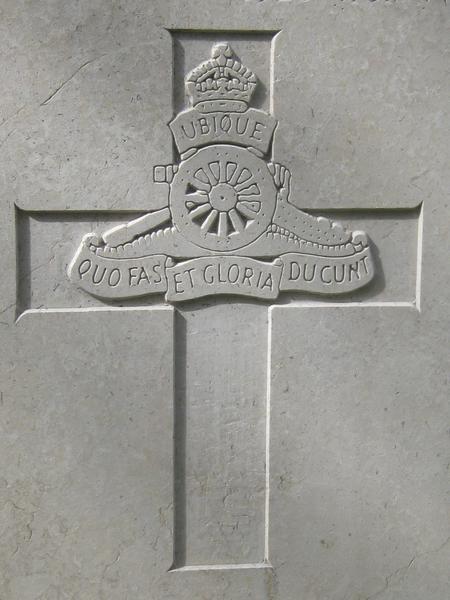 It is nearly 106 years since 15356 Quartermaster Sergeant George Painter was buried in the churchyard at Kingsland. Crossing south of the church one is struck by the splendid Commonwealth war grave memorial with its Royal Artillery badge and motto “Quo Fas et Gloria Ducunt” (“Wherever Right and Glory Lead”). While admiring the splendour of this grave marker, It is sad to reflect on George, a man in his forties, presumably with a family, dying on 9 September 1918, only two months before the Armistice. In which theatre of the conflict did he die? And, given that no bodies of those killed in action were repatriated for burial after the first year of the Great War, how did he come to be buried at St Michael and All Angels?
George Painter was born at Diddlebury, about 5 miles north-east of Craven Arms, to agricultural labourers Samuel and Margaret Painter. His uncle was a local farmer, and in the 1881 census, ten year-old George was living with him while attending the willage school. In 1890, at the age of nineteen, George enlisted in the Royal Regiment of Artillery. He is listed at Woolwich barracks as a driver (of an artillery horse team) in the 1891 census and, after this, was apprenticed as a saddler, rising to the rank of Saddler Quartermaster Sergeant, with its insignia of a king’s crown above a horse’s bit and bridle. Assuch, George was responsible for all the horse harness and saddlery for the 48th Brigade of the Royal Field Artillery. George Painter was honourably discharged after 21 years’ service on 11 November 1911.
On 23 November 1905, he had married Eliza Alice Greenwood in Derby. In his pension record of 1918, when she is listed as his next of kin, she was living at The Broad, Leominster, a nineteenth-century farmhouse on the Luston Road out of town. When the couple moved to the Leominster area, what occupation they pursued, or whether they lived on his army pension, is not recorded. In 1911 a quartermaster sergeant earned 4s 2d per day (about £20 in 2024) so they would not have been well off. George and Eliza’s marriage was childless.
With the outbreak of war, George was quick to volunteer his services, enlisting at the Leominster recruiting office on 29 September 1914. He was described as 5 ft 4½ inches tall, chest 37 inches, with brown hair and hazel eyes, weight 128 lbs, making him of slim build. Too old for front line deployment at 42 years 9 months, he was posted to the Royal Artillery at Woolwich Barracks with his old rank of Saddler QM Sgt., with the 22nd reserve battery. George was transferred to France on 21 May 1915. In 1917, he became part of the newly formed Labour Corps, with the service number 731357.
In January 1918, George began to experience symptoms of abdominal and back pain. He reported to the medical officer who found a pulsating mass and diagnosed an aneurysm of the arch of the aorta, a swelling in the main blood vessel that carries blood through the body, from the point where it leaves the heart to include the base of both carotid arteries. Even today surgical treatment is complicated and risky. In 1918 surgery would not have been possible, and the question as to whether an operation was performed or refused is simply answered “not applicable”. George was transferred to Aldershot barracks on 15 February 1918 where, on 5 September, he was described as being in poor condition. He was discharged on 6 September and three days later his pension record simply notes “Man died 9.9.18”.
Eliza Painter went to live at 18 Anchor Street, Lincoln and then disappears from the records. In a cruel twist of army policy, she was not entitled to a war pension as her husband’s death was not a result of his army service. Even though he did not die in battle, George Painter deserves our recognition for his faithful service in the British army. Please, spare a thought for him as you cross the churchyard and pass his grave.
Ralph the Timid
 It is quite easy to feel sorry for Ralph of Mantes. A grandson of Æthelred the Unready, he was a close companion of Edward the Confessor, and one of the Norman knights who accompanied him, in 1051, from exile in Normandy to succeed his half-brother as king. When Earl Godwin and his sons, including the future Harold II, rebelled again Edward, Ralph was one of the supporters who forced them into exile, if only for a year. As a reward, Ralph was made Earl of Hereford, ruling lands from the king which included the King’s Lene or Kingsland.
Herefordshire in the mid-eleventh century was a wild frontier. The Saxon name of Hereford, known in Welsh as Henffordd – the old road (into England) – was derived from “here-“, meaning army or battle, a clear demonstration of its role in preventing the Welsh from transgressing the ford. The scene of many border skirmishes, Hereford came close to loss during Ralph’s tenure as earl, when King Ælfgar of East Anglia joined with his son-in-law, Gruffydd ap Llewelyn, King of Gwynedd and Powis, to attack the city in 1055. On 24 October of that year, Ralph left the city with his army to meet the Welsh army and suffered a disastrous defeat.
The rout was said to have started in Ralph’s Norman knights and for this reason, this puissant Norman nobleman, has gone down in history as Ralph “the Timid”. Although he went on to manage lands in the East Midlands, became a benefactor of Peterborough Abbey, and was described by the Norman poet Geoffrey Gimar as “a right good man”, Ralph was quickly deposed as Earl of Hereford and replaced by his rival, Harold Godwinson. Poor Ralph, always to be known to historians by an insulting nickname!
Harold Godwinson, of course, went on to succeed Edward as King of England, ruling for only 9 months before he met his end at the Battle of Hastings in 1066. For me, Harold is probably one of the greatest Saxon kings we never had. By the time he came to the throne he had become the greatest landholder after the king. He had his revenge on Gruffydd ap Llewelyn when he led a small contingent of mounted men from Gloucester to the Welsh king’s Royal Vill at Rhuddlan, a distance of 130 miles, which he covered in 2 days. A similar feat of arms saw him march his army to York to defeat an invading army from Norway, led by his estranged brother, Tostig: he then turned his men around to march to Hasting to face the invading Norman army under William the Conqueror.
Did Harold II have any knowledge of his lands in North-West Herefordshire? Actually, he may have done. His older brother, Sweyn, who preceded Ralph as Earl of Hereford, caused a stir in 1047 when he abducted Eadgifu, abbess of Leominster, with the intention of marrying her and controlling the abbey lands. She was later returned safely to her abbey.
Ironically, Ralph the Timid enjoyed a better legacy than his erstwhile rival, although he died in 1057 aged only in his early 30s. Reconciled to Harold Godwinson, Ralph named his only son Harold, and Godwinson held the earldom of Hereford for him until he came of age. All changed with the conquest, but Ralph’s son Harold managed to survive and retain some lands. He is remembered in the village of Ewyas Harold in the Golden Valley. Very few people will have heard of Ralph the Timid – his embarrassing epithet was buried with him in Peterborough Abbey.
Harold Godwinson, King Harold II, was arguably to suffer a more ignoble fate. Remembered by every schoolchild (before the modern history curriculum, at least) as the loser of Hastings, a tragi-comic figure whose death with an arrow in the eye originates from the Bayeux tapestry. For those of my generation and older, he will always be the subject of a comic monologue by the immortal Stanley Holloway (written by Mariott Edgar), who says of Harold’s death at Hasting on 14 October 1066:
And after battle were over
They found ‘Arold so stately and grand
Sitting there with an eye full of arrow
On his ‘orse with his ‘awk in his ‘and.
The Woolhope Naturalists’ Field Club in Kingsland, 1864
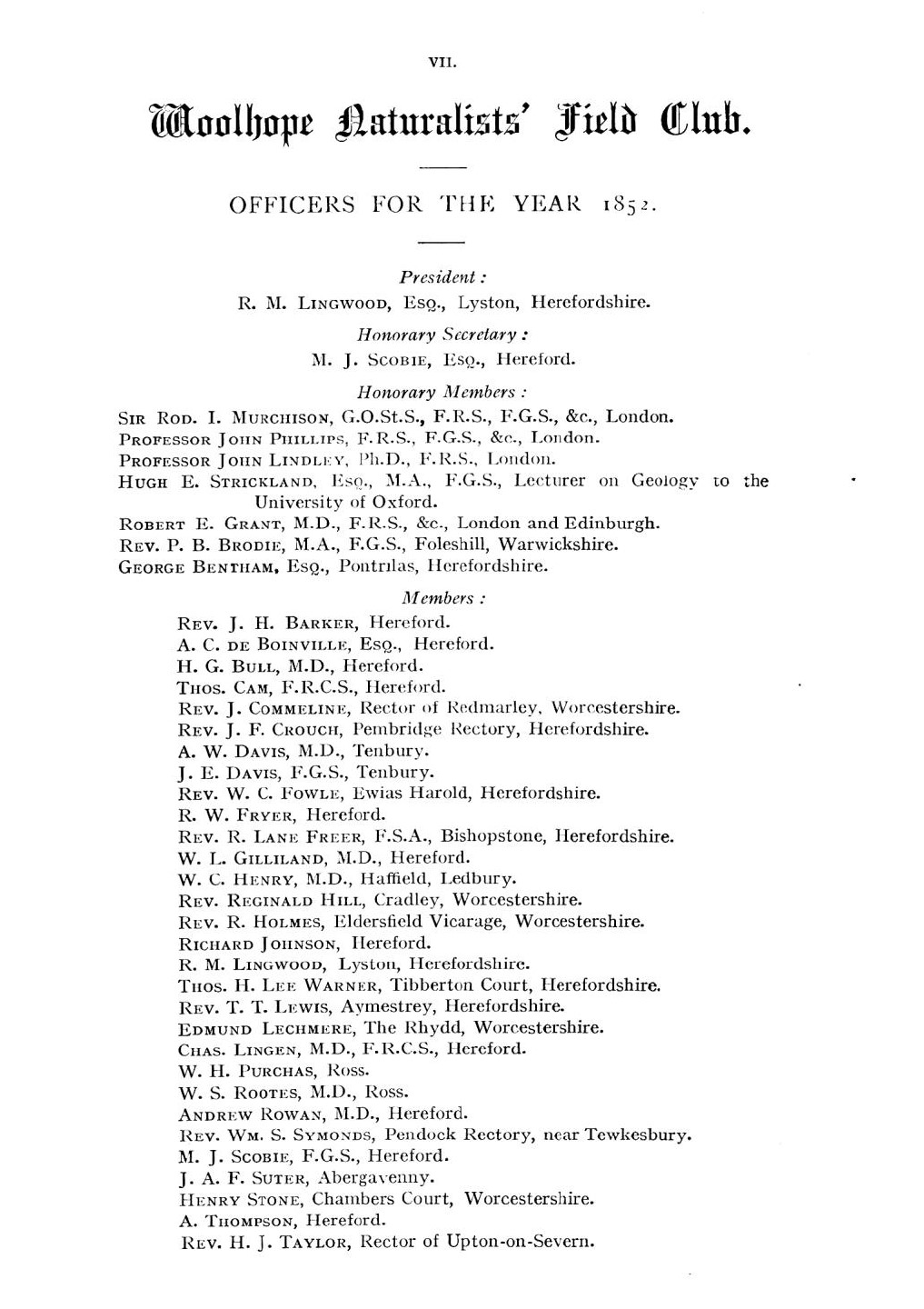
On Thursday 26th May 1864, a group of dignitaries assembled at Kingsland station. A joint field meeting attracted members of the Woolhope Naturalists’ Field Club, based in Herefordshire, and its equivalent Caradoc Field Club from Shropshire. Chief among them was Rev. James Frederick Crouch, Rector of Pembridge from 1849, who was a noted fossil-collector and for whom the Lower Devonian fossil fish Pteraspis crouchi is named. Crouch was to lead the expedition, whose main goal was to examine the geology of the local area.
Having met at the station, the party walked to Croft Castle to measure the sweet chestnut trees in the avenue above the house. Legend has it that these trees were taken from the holds of galleons that formed the Spanish Armada. They were planted between 1580 and 1680, supposedly in a formation that resembles the battle plan for the 1588 encounter, when Sir Francis Drake “singed Phillip of Spain’s beard”. More than 150 years ago, these trees were measured between 18 and 21 feet in girth, with one branch 9 feet around. Of the oak trees planted around the same time to represent the English warships, two were measured at 26 and 30 feet, respectively.
The party then walked up the dingle to Bircher Common, examining a quarry in the world-famous Aymestry Limestone, a component of the Silurian rock that was first described by Rev. Thomas Taylor Lewis of Aymestry. Lewis was dead by this time, but during an excursion to Aymestry in 1852 he had taken the delegates to the rectory “where he threw open for their inspection a collection of fossils, the fruits of many years careful investigation of Silurian and other rocks, and certainly one of the finest collections in the kingdom”. They then proceeded to Whiteway Head quarry (which is in the woods between Bircher and Leinthall Earls), where they examined the rocks for fossils, and the President, Rev. Crouch, gave a talk on the geology of the area.
After hiking to the top of Croft Ambrey hillfort they walked via Aymestry Church, to the Mortimer’s Cross Inn for a lunch that would have been substantial. Members subscribed to the Shakespearian principle that “the mind shall banquet though the body pine”, adding that the mind having ‘banqueted’, the body would be treated with equal justice. At the end of the afternoon, the gentlemen walked back to Kingsland station before taking trains to their various homes.
It is not surprising that the gentlemen needed a substantial dinner as they would have walked, conservatively 12-14 miles over rough terrain. The Woolhope Club continues to thrive and to run several field meetings a year – although modern members are arguably less hardy and more used to the convenience of the automobile than their 19th century predecessors.
Alfred Watkins and historical crosses
There was little likelihood that Alfred Watkins’ book The Old Standing Crosses of Herefordshire (1930) would ever become a bestseller. Even the forward by the Bishop of Hereford appears to damn with faint praise – “He has chosen a subject of great interest from many points of view…” (whose, for example?). Nevertheless, this rare book provides a photographic record of all the crosses of Herefordshire as they were after the “vandal age of wanton or careless destruction of such relics of the past” (to quote the bishop).
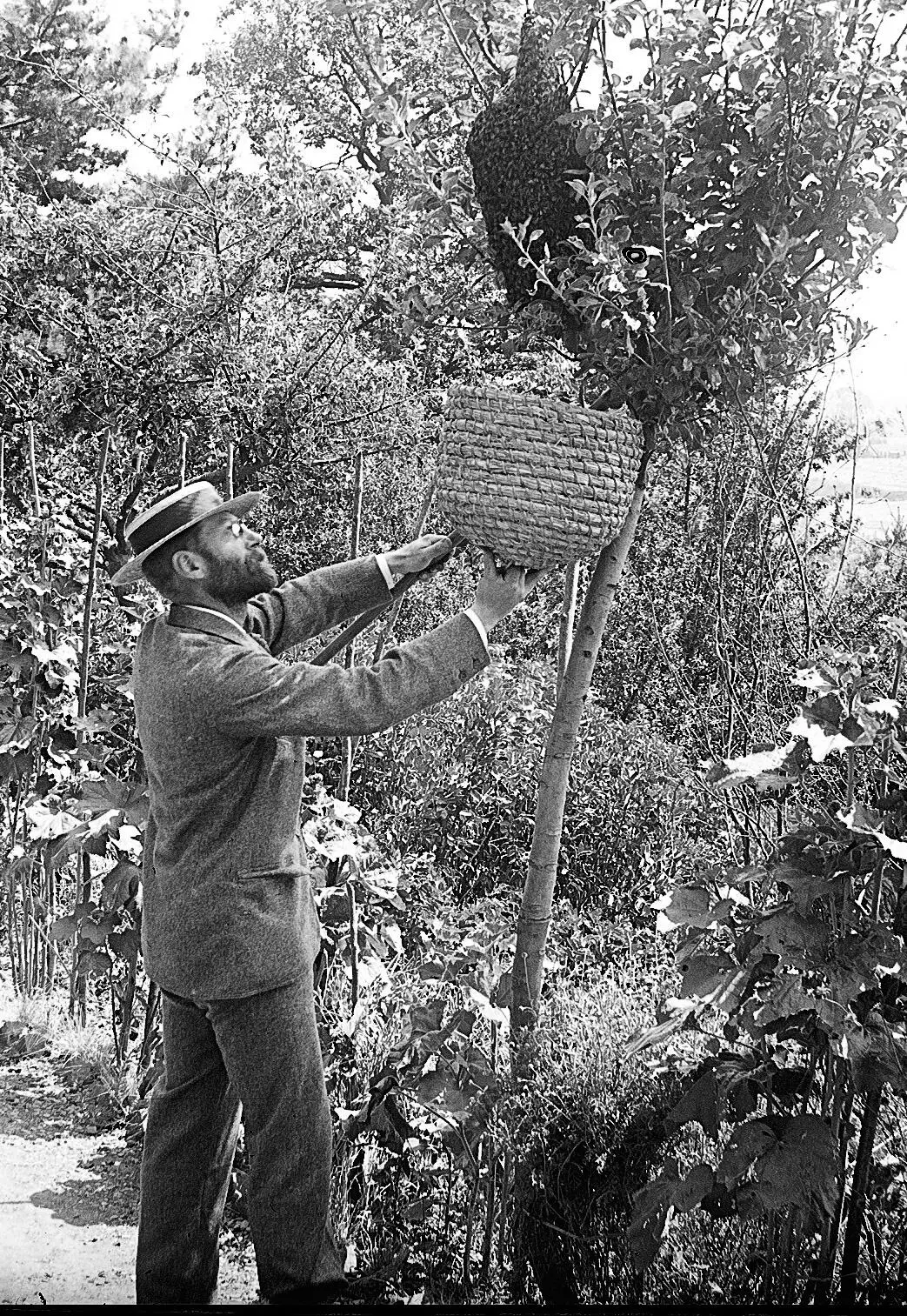
Afred Watkins (1855-1935) was from a wealthy Hereford family. His early passion was for photography, and he invented the Watkins Bee exposure meter, used in the 1911 Australasian Antarctic expedition, Scott’s 1910 ‘Discovery’ expedition, and Shackleton’s ‘Endurance’ expedition of 1914. Watkins was awarded the Royal Photographic Society’s Progress Medal, together with fellowship of the society.
His other interest was archaeology. One June day in 1921, driving to a site in Blackwardine, near Stoke Prior, he realised that several features of the landscape appeared to line up. At home, he drew lines on ordnance survey maps linking ancient sites, and formed the theory that prehistoric peoples travelled on straight trackways identified by “mark points” along the way. In 1925, his book The Old Straight Track theorised that these “leys”, from the Old English for “clearing”, were trade routes, and might be orientated to align with the summer and winter solstices. He noted the common use of “dod” in English place-names, and suggested that “dodman”, the English vernacular for snail, derived from the ancient word for a surveyor as the snail’s two horns resembled the surveyor’s rods. He linked these with the builder’s “hod”, and the verb to dodder – which he said described the movements of a surveyor’s rods as they searched for a source. He further proposed that the chalk figure of the “Long Man of Wilmington” depicted between two rods, is the image of a neolithic dodman.
The idea of ley lines was never accepted by the archaeological establishment. They were impractical as routes, the sites linked were from disparate historical periods, and prehistoric peoples did not have the means to survey accurate straight lines over long distances. In 2003, excavations at the “Long Man” showed that it was carved in the 17th or 18th centuries. The editor of Antiquity journal simply filed letters from Watkins and his adherents under “Crankeries”. Watkins wrote two further books on ley lines, and founded the Straight Track Club, which met for more than two decades before it disbanded in 1948. Ley lines were rediscovered by the Earth Mysteries Movement in the 1960s and, with UFOs, are now firmly accepted within the New Age counterculture.
The Old Standing Crosses of Herefordshire (1930) discusses their origin as pagan sacred stones, developing into Celtic, Saxon and mediaeval crosses. They often formed landmarks where meetings could be held. Some, such as those at Pembridge and Bodenham, doubled as market crosses. In Wales, farm-workers were hired at the cross, their pay agreed as the “cross-wage” or “cyflog y groes”. In churchyards, standing crosses played a role in the Palm Sunday processions and were used as preaching crosses and for sanctuary, whereby the persecuted could claim respite from their pursuers.
In 1930, the Kingsland churchyard cross was much as it is today. Considered to be 15th or 16th century in origin, it is of the most usual type. Watkins notes that the step is made from a circular stone “like a cider-mill runner”, with an octagonal socket stone and shaft that goes from square to octagon, surmounted by a capstone from which a sundial is missing.
The cross in Aymestrey churchyard is much more interesting. With three-tiered octagonal steps, the shaft and capstone surmounted by a ball, it is larger, at 8ft 6in. Watkins dates it to the 16th century, a late example, commenting: “In the great majority of our Herefordshire crosses, the religious purpose was … uppermost, and I only know of one in the county without the Christian symbol, this being in Aymestrey churchyard, perhaps built under some local influence of Puritanism” (the metal cross is of later date).
Alfred Watkins was a stalwart of the Woolhope Club where, as president in 1919 he tried to lift the ban on women membership (women were finally admitted in 1967). He was a member of the Hereford Rowing and Bee-keeping Clubs, and committed to the rescue of ancient buildings, including the Pembridge market hall. When he died, in 1935 at the age of 80, the Hereford Times concluded that “First and foremost he was a Herefordshire Man, as native to the county as the hop and the apple”. Let’s raise a glass of Wye Valley’s “Watkins’ Triumph” to this great local champion!